/minds

Minds

Your personal AI operating system

Build the custom second brain that you've always wanted. Tell minds what kind of interface you want for email, slack, notion, github, calendar, etc... and it will build it.

GitHub Stars
402
Contributors 24
View on GitHub

Customize the UI for running your business and life

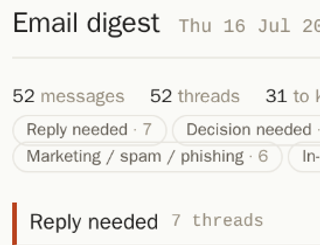
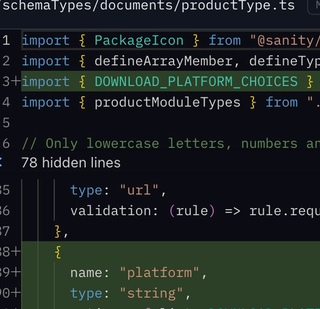
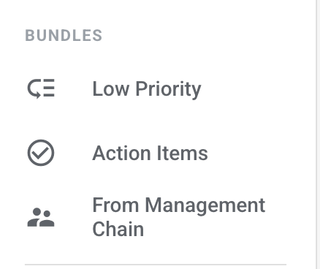
My life was ruined when Google Inbox was deprecated. I need sweep-to-done in my email. I want Gmail's basic HTML view back but with bidirectional links like Roam Research. When I'm working, I want an IDE that where I can reply to comments from GitHub inline, supports vim keybindings plus random shortcuts I made up, local auto-saved history like in JetBrains, and custom syntax highlighting AND corgi mode. And when I merge a PR, I want it to auto-slack my reviewers. Minds can build this for you.

Out of the box integration with email, slack, GitHub, etc.

Out of the box integration with email, slack, GitHub, etc.

Under the hood, Minds is Claude + a bunch of integrations we've already built in. Just tell minds "I want to build a auto-responder on slack" and give it permissions. Like ChatGPT, you can iterate by telling it what you don't like about what it's made.

Keep your data private

Keep your data private

Imbue never sees any of your personal data. You have the option to run locally or self-host your minds, and the whole stack is open source for verification at github.com/imbue-ai/mngr. Minds' Latchkey model also keeps credentials outside the agent's environment. Look at how happy these people are, because they're not under the thumb of big tech!

Persistent compute and statefulness

Persistent compute and statefulness

In Minds, you are allocated your own persistent Linux machine. You can schedule cronjobs on the VM, create long-running processes for polling, or spawn agents on demand. For example, your Minds can respond to emails automatically while you are sleeping.

Feedback from beta

“After I left Google, code reviews were so painful without Critique. I built my own version in Minds that integrates with GitHub and JIRA.”

Early tester
paperclip

"This is more powerful than anything I could've done in Cowork. It was easy to get started by pulling other people's inspirations on GitHub directly into my minds: https://imbue.com/minds/inspirations/"

Early tester
paperclip

"I made a Minds to batch-label my emails as important, delete, or delegate. Bulk deleting email has saved me so much time. I liked that I can publish my Minds to share with others."

Early tester
paperclip

Frequently asked questions

How do I get it?

Minds is in beta for Apple Silicon! Download now.

For Windows and Apple Intel users, join the waitlist.

For Linux users, build from source.

Isn't this just Claude?

Currently, Minds wraps Claude under the hood, but we’re working on making open source models an option, so users aren’t reliant on the whims of Anthropic or OpenAI.

You could indeed build your tool with just Claude, without Minds. But Minds has already figured out hosting, Gmail/Slack/Calendar/Notion/GitHub/etc integration, and mobile access. Minds is worth trying if you want to just get something done and not worry about all of the details!

Minds is free and open source, you only bring the Claude subscription. Our hosting is cheaper than AWS.

Where does my data live, and who can see it?

Minds is set up as a Debian VM. If you self host, all data would be on your machine.

If you choose cloud hosting with Imbue, your Minds will run in a cluster owned and managed by Imbue. We do not view or use your data in any way.

How is this different from Lovable/Replit?
  1. Privacy. Lovable stores and manages your OAuth tokens on their platform, and your agent and app have to go through Lovable to access (for example) Gmail. Minds' Latchkey model keeps credentials outside the agent's environment on infrastructure you can inspect (it's open source) or self-host. A Lovable app processing your data, such as your email, runs on Lovable’s cloud + Supabase, both controlled by the company. A Mind can run locally or self-hosted.
  2. Persistent compute and statefulness. A Lovable app is a web app. In Minds, you are allocated your own persistent Linux machine. You can schedule cronjobs on the VM, create long-running processes for polling, or spawn agents on demand. For example, your Minds can respond to emails automatically while you are sleeping.
  3. Continuity across Minds apps. In Lovable, each app is an isolated deployments with separate databases. In Minds every app (for a given user) shares one machine, so your TODO app can read your email app's data, and any chat can act on all of it.